Our reading focused on the Progressive Era from 1890s-1920s. We learned about Progressive Teachers and how they tried to put the student first, incorporate real world situations, and that every student has their needs best fit for them as an individual. There was a heavy influence on pragmatism, establishing an important foundation for the students in early childhood education encouraging students to take interest in what they do well it. Overall I believe the Progressive Era was a push for social change, benefits for the community, and to improve life conditions for the maximum amount of people. Progressivism is the belief that learning how to learn is more important than knowing a specific facts. Clild centered expierental learning created a move for schools curriculum. Learning about the lab schools made me have an “aha” moment when I realized the greater purpose of planting a seed in my 6th grade science class. The strength of learning experiences is taking prior knowledge and connecting it to the new material helping students gain a great understanding. Our LC agreed that is not only the job, but the goal of the teacher to prepare the student for the real world after schooling. Similiar to this agreement, Dewy believed teachers must prepare the child to integrate into the world. Outside of the classroom, individuals of the Progressive Era pushed for extracurricular activity involved to boast the role schools played in the community.
Our LC chose to demonstrate aspects of experiential learning and in attempts to teach like Dewey, created our own form of “Lab Schools” within the classroom. We decided to do a learning experience where the class would be involved in discussions and asked to participate frequently. We decided to emphasize the learning experiences to represent the Progressive Era because we ourselves, thought it was so interesting how aspects of new educational ideas, and still in our schools today. By taking the prior knowledge our peers have of their previous schooling, we connected their experiences to the text to help them understand where these educational elements originated. We took the passage of the texts that we most related to, such as extracurricular, lab schools, politics of the Progressive Era, and the Progressive Era as a whole.
For our learning experience we used several tactics to involve the classroom. We used google slides to give a visual aid to the classroom with important quotes and ideas from the text. Each group member enaged the students in a learning experiene and then followed with slides that connected the learning experience to the Progressive Era, historically and in everyday progressive representations. Members of our group incorporated the white boards for four corners, post-it note wraparound reflection and classroom participation through questions as different elements of learning experiences. Google Slides: https://docs.google.com/presentation/d/1dYbxCLr-wTIXvj888mb-t9-nURzmoRaaeboBQEsGEdM/edit?usp=sharing
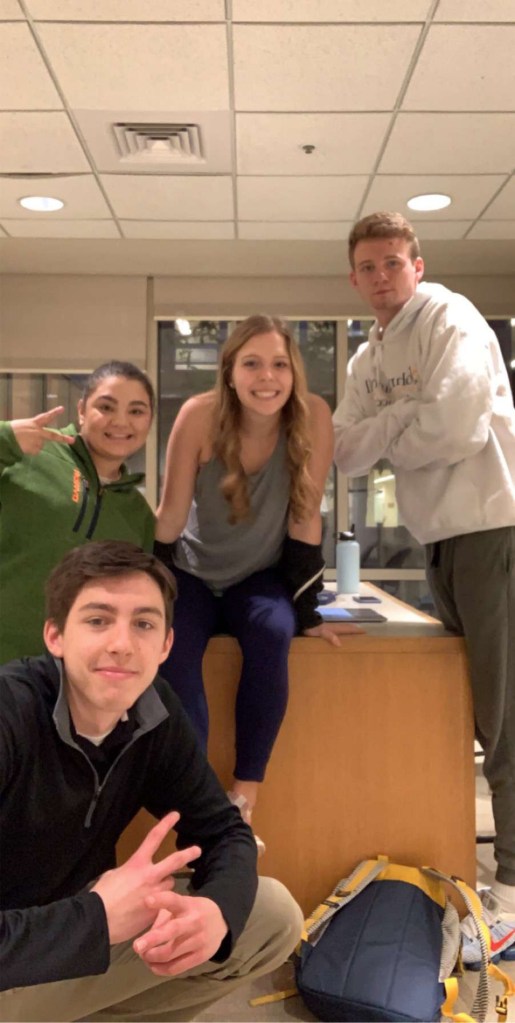
We met in the library to go over the content and figure out how to make the goal of the lesson a reality. Personally, I reviewed the notes from the reading and picked 4 main topics from the Progressive Era. I attempted to pick topics that we could easy incorporate learning experiences as an intro to the idea and further teach the material in an effort to connect with the classrom. From there, we all worked together and brainstormed pedagogical ideas and what learning experiences would be the most effective on our classroom audience. I located the wraparound reflection on the link Teaching Ideas from Facing History which we decided to use as the closure for our learning experience. Throughout our presentation day I attempted to keep track of timeto take advantage of our opportunity to teach.
One of my responsibilities during the learning experience presentation was to start the Progressive Era conversation by asking students about lab experiences in their early childhood or middle school classes. I tied these examples to Dewey’s ideas of lab schools and experimental learning. I brought to light the idea of child-centered learning and the foundations of the Progressive Era. I went on to talk about the attempt at cirrculum reform, produced in 1917, the Cardinal Principles Report. They listed seven objectives of education: health, command of fundamental processes, worthy home membership, livelihood, civic educatio, worthy use of leisure, and ethical character. I incorporated this curriculum reform as a way to share varioues elemts of the Progressive Era, not just the movements within the classroom but to education as a whole. My notes from the reading and the meeting with Dr. Shutkins were shared with the group to draw on for materials and ideas.
Tools : https://www.facinghistory.org/resource-library/teaching-strategies
 ED386 Educational Technology Mary's Blog